Beate Uhse: From Luftwaffe Ferry Pilot to Post-War Entrepreneur
She flew fighter aircraft for the Luftwaffe, escaped from Berlin in April 1945, and founded the world's first sex shop. A life between war and post-war Germany.

Beate Uhse (1919–2001) is remembered in Germany as the businesswoman who brought contraception and sex education to the post-war population, and who opened the world’s first sex shop. Fewer people know that she was one of the few women who flew aircraft for the Luftwaffe during the war. Her life connects two very different Germanys: a dictatorship that idealised women as mothers, and a post-war society struggling with sexuality, shame and reconstruction.[1]
A pilot in the Third Reich#
Born Beate Köstlin in 1919 on an estate in East Prussia, she grew up in a liberal family. Her mother was one of Germany’s first female doctors. She earned her pilot’s licence in 1937, at 18, and worked as a stunt and test pilot. In 1939 she married the pilot Hans-Jürgen Uhse, who was killed in a crash in 1944.[2]
The Nazi regime did not allow women into combat. But because pilots were short, a small number of women were employed to ferry aircraft, flying new and repaired machines from factories to air bases. From 1944 Uhse, as a Flugkapitän, flew fighters and other types for a ferry unit.[1]
Escape from Berlin, April 1945#
In the last days of the war, with the Red Army encircling Berlin, Uhse flew a small aircraft out of the city with her young son, his nanny and wounded soldiers. She landed in Schleswig-Holstein in the north, where she was taken prisoner by the British. Like millions of Germans in 1945, she started again from nothing.[2]
The post-war business#
After the war she met many women who feared unwanted pregnancies. There was hunger and housing shortage, men had come home damaged by the war, and the information available was poor. In 1946 she began selling a short leaflet explaining the rhythm method of contraception (“Schrift X”). It became the basis of a mail-order company for contraceptives, marital advice and erotica. Her company was the target of more than 2,000 criminal complaints for “indecency”. In 1962 she opened what is usually called the world’s first sex shop, in Flensburg.[1]
Why her story belongs here#
Uhse’s biography shows the limits of the Nazi image of women, which centred on motherhood. Even this regime used women in technical and military roles when it needed them. Her post-war career also tells the history of a society whose moral norms had been shaped by the dictatorship and the war, and which renegotiated them in the 1950s and 1960s. The historian Elizabeth Heineman shows how closely the two stories are connected.[1]
Gallery#
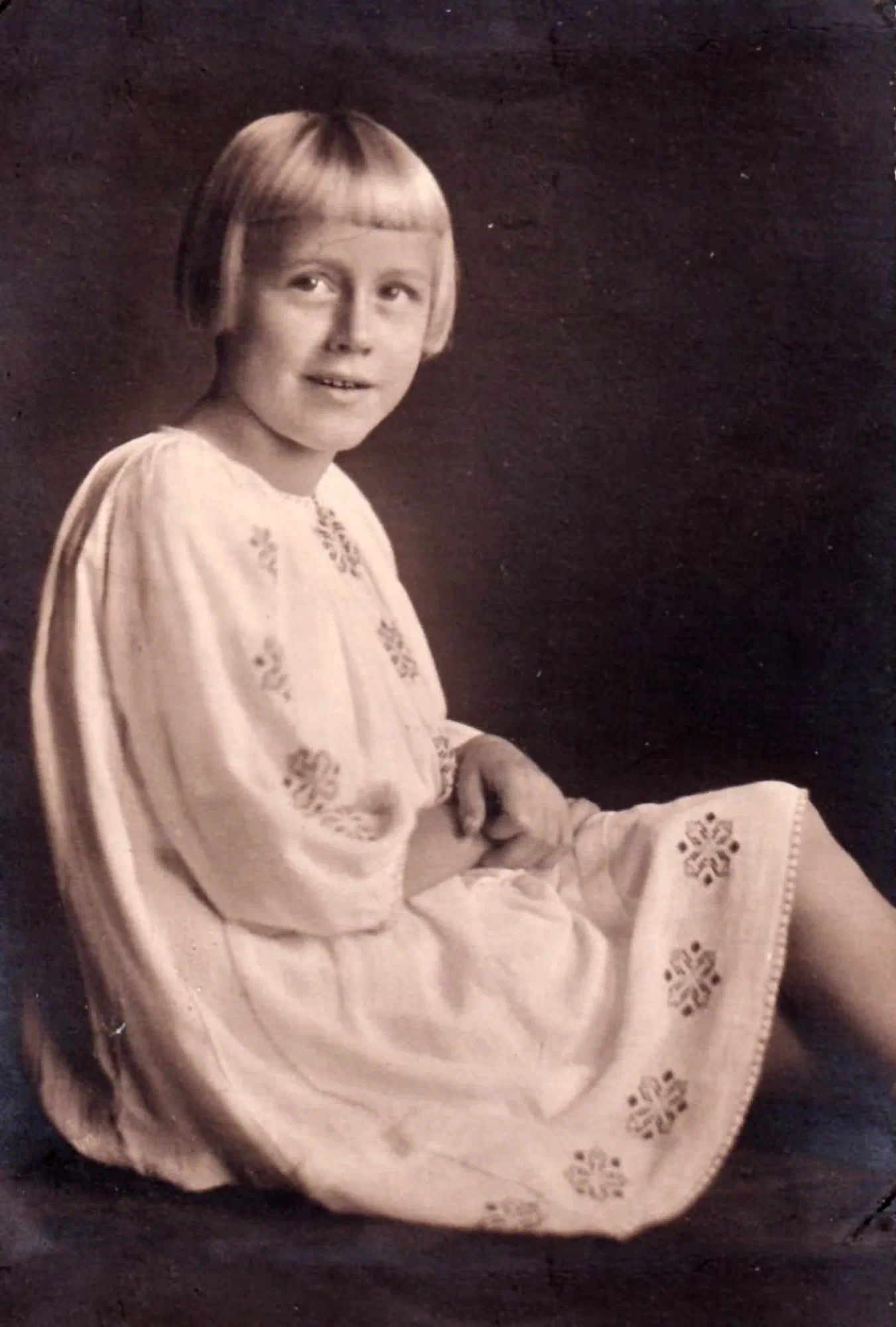
- Beate Köstlin as a child — She grew up on an estate in East Prussia in a liberal family; her mother was one of the first women doctors in Germany.
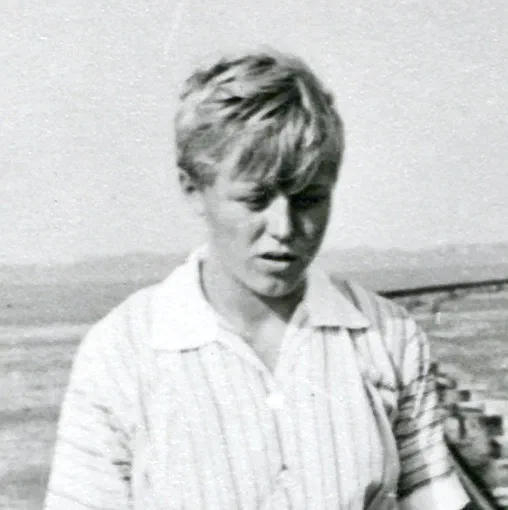
- On the island of Juist — She attended the progressive “Schule am Meer”; soon afterwards she trained as a pilot and earned her licence in 1937.
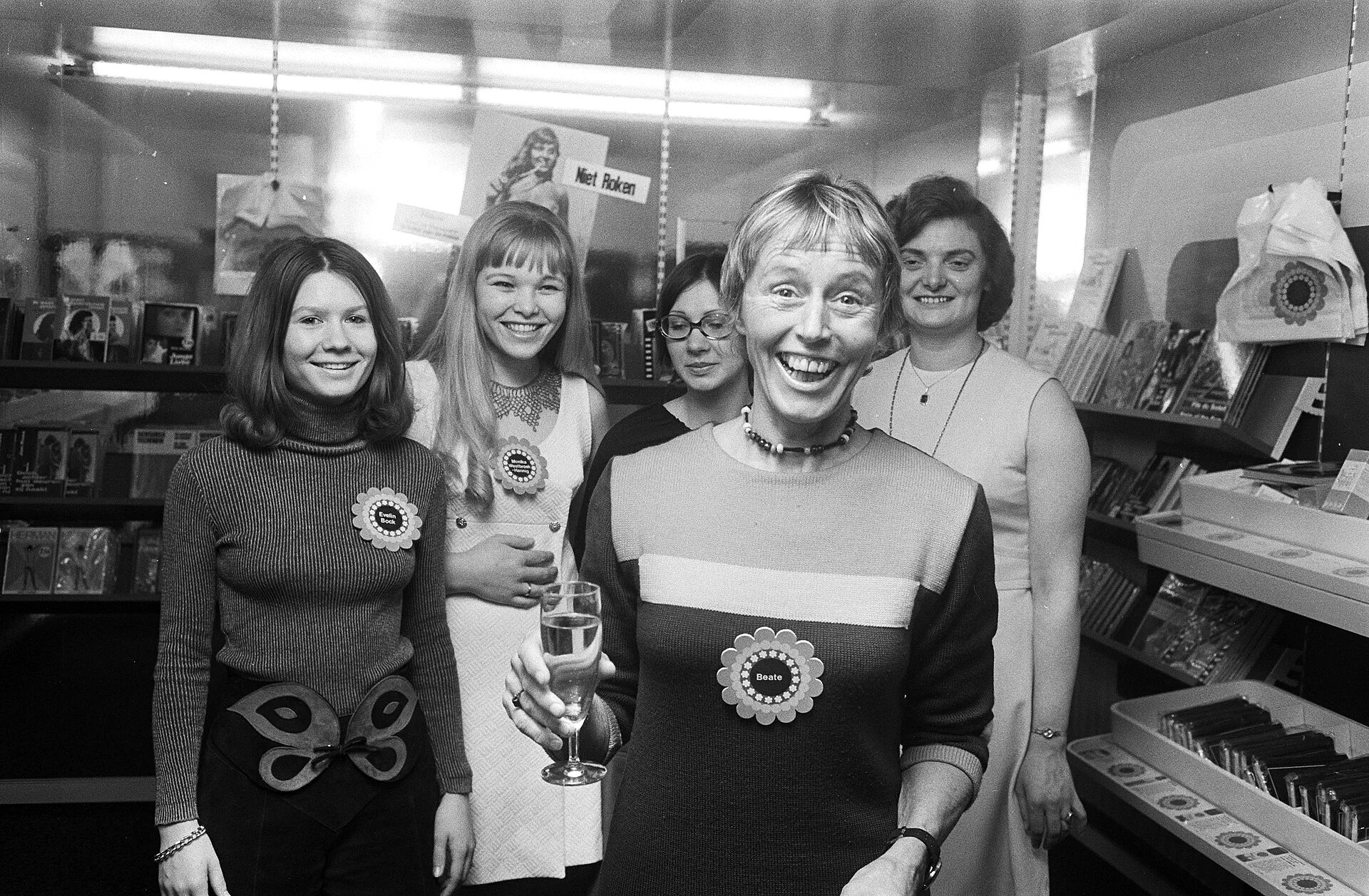
- Opening in Amsterdam, 1971 — By the 1970s her business had become a large company with shops across West Germany and abroad.
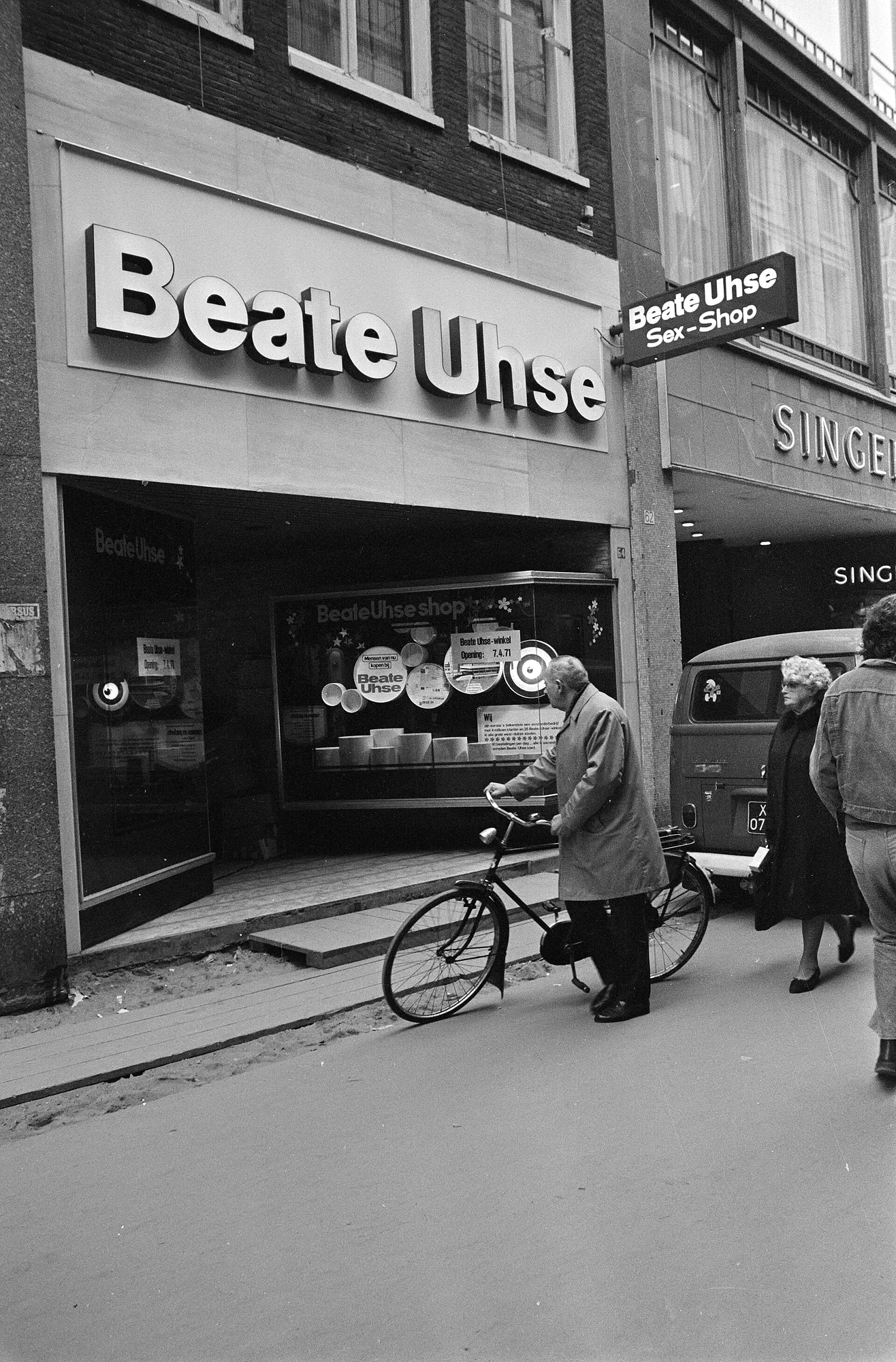
- Kalverstraat, Amsterdam — The name “Beate Uhse” became a brand — and part of the history of the sexual revolution in post-war Europe.
Sources
- Elizabeth D. Heineman (2011). Before Porn Was Legal: The Erotica Empire of Beate Uhse. University of Chicago Press.
- Beate Uhse, Ulrich Pramann (1989). Ich will Freiheit für die Liebe. Ullstein, Berlin. Autobiography; self-portrayal.


