The Fall of Weimar Berlin, 1918–1933
Revolution, inflation, the Golden Twenties, depression and street war: how Germany's first democracy died in its capital, step by step.

Between 1918 and 1933 Berlin was the laboratory of Germany’s first democracy. It was a city of revolution and street battles, of hyperinflation, of cabaret, film, architecture and sexual freedom, and of mass unemployment. In January 1933 SA columns marched through the Brandenburg Gate with torches. How did the republic lose its capital?[1]
Two republics proclaimed in one day
Philipp Scheidemann proclaims the republic from the Reichstag; two hours later Karl Liebknecht proclaims a socialist republic at the palace.The Spartacist uprising
Freikorps troops crush the communist uprising; Rosa Luxemburg and Karl Liebknecht are murdered on 15 January.The Kapp Putsch
Right-wing troops occupy the government quarter; a general strike makes the putsch collapse within days.Greater Berlin
Berlin absorbs its suburbs and, with almost 4 million inhabitants, becomes the third-largest city in the world.Hyperinflation
One US dollar costs 4.2 trillion marks. Savings are wiped out — a trauma for the middle classes.The “Golden Twenties”
Cabarets, cinema, Bauhaus architecture, the “New Woman”, a gay subculture and the Institute for Sexual Science: Berlin becomes a byword for modernity — and a target of right-wing hatred.“Blood May”
Police under Social Democratic command fire on banned communist May Day demonstrations; 33 people die. The split of the left deepens.The Depression begins
By 1932 about one in three Berlin workers is unemployed.The “Prussian coup”
Chancellor von Papen removes the Social Democratic government of Prussia by decree — the end of the last democratic stronghold.The BVG strike
Communists and Nazis jointly strike against the Berlin transport company — enemies of the republic united.Hitler becomes chancellor
SA torchlight parade through the Brandenburg Gate.The Reichstag fire
The next day an emergency decree suspends basic rights. Thousands of opponents are arrested; the first “wild” camps open in Berlin.
A democracy with many enemies#
The republic was born in defeat, and it had enemies from the start. Monarchists, nationalists and the military establishment blamed it for the lost war. They spread the “stab in the back” legend and the “November criminals”. On the far left, the communists wanted a soviet republic and denounced the Social Democrats as “social fascists”. Berlin saw both kinds of violence: the Freikorps murders of 1919, the Kapp Putsch of 1920, and in the early 1930s almost daily fighting between SA and communist squads.[2]
The Golden Twenties#
Between the inflation of 1923 and the crash of 1929, Berlin experienced a short boom. It became a world capital of modern culture. There were the films of Fritz Lang, the theatre of Bertolt Brecht, the architecture of the Bauhaus and the housing estates, and the “New Woman” with short hair and a job. Gay and lesbian subcultures flourished openly, and Magnus Hirschfeld founded the Institute for Sexual Science. Nazi propaganda attacked all of this as “degenerate”, “Jewish” and “un-German”. In May 1933 Hirschfeld’s library was among the first to be burned.[1]
Crisis and collapse#
The world economic crisis of 1929 hit Berlin hard. By 1932 about one worker in three in the city was unemployed. Parliamentary government ended in 1930, when chancellors began to rule by presidential emergency decree. Unemployment, fear of communism and the democratic parties' inability to work together drove voters to the extremes. In Berlin the NSDAP never won a majority. In the last free elections the communists and Social Democrats together were stronger. But the city could not stop what happened nationally.[2]
Gallery#
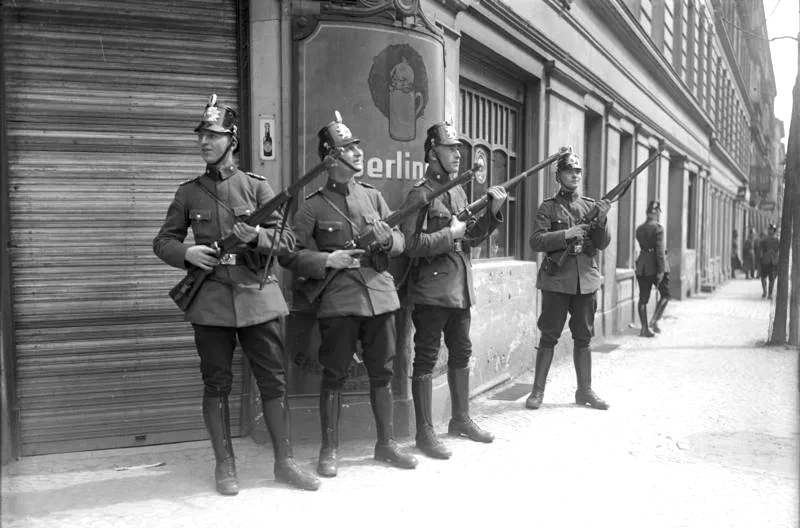
- “Blood May”, 1929 — The police, under a Social Democratic police chief, fired on communist demonstrators; 33 people died. The bloodshed deepened the split between the two workers’ parties that later left the republic without defenders.
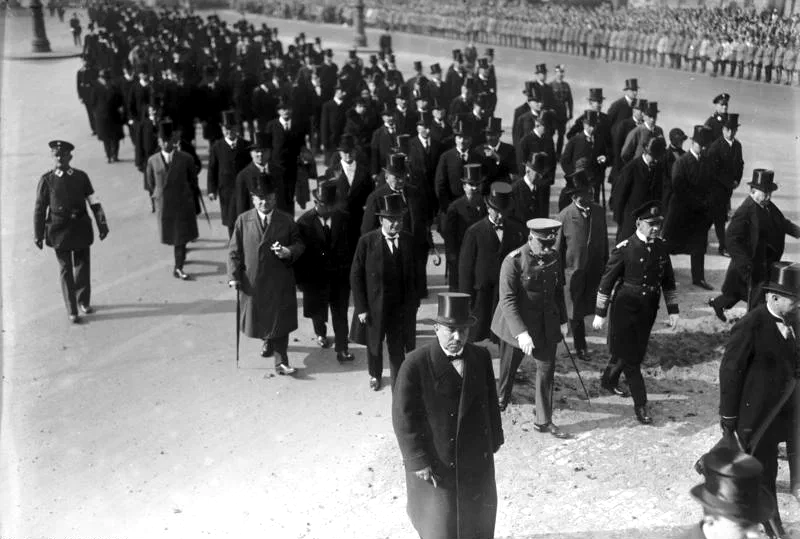
- Funeral of Gustav Stresemann, October 1929 — Stresemann had brought Germany back into the international community. He died on 3 October 1929; three weeks later the Wall Street crash began the crisis that destroyed the republic.
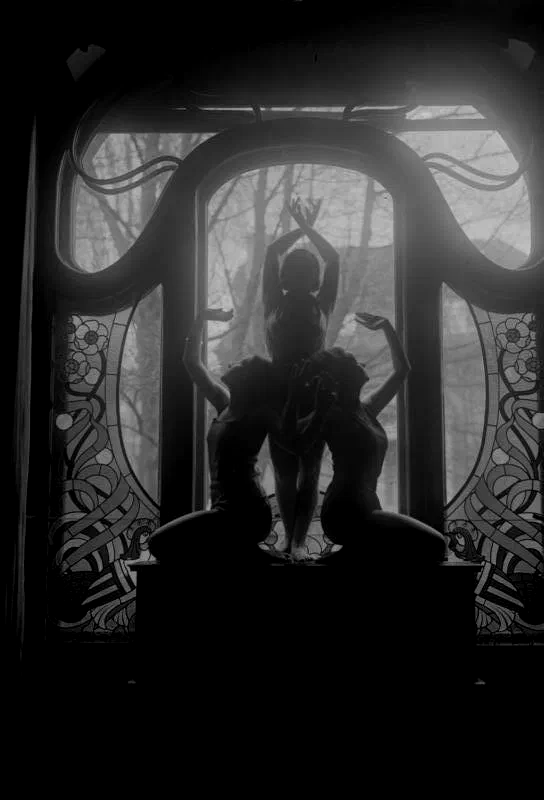
- The “Golden Twenties” — Expressive dance, cabaret and modern theatre made Berlin a world capital of culture — and a target of Nazi propaganda against “degenerate” art.
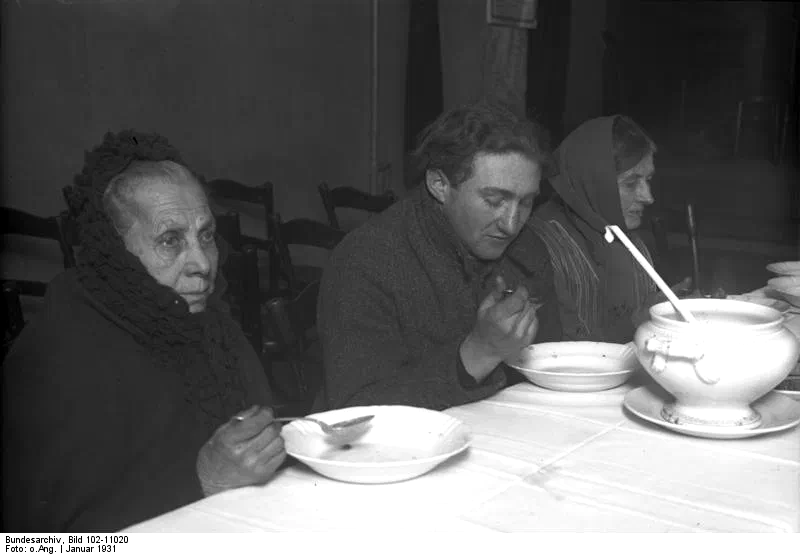
- A warming hall in Neukölln, January 1931 — By 1932 about one in three Berlin workers had no job. Public kitchens and warming halls kept many alive through the winters of the Depression.
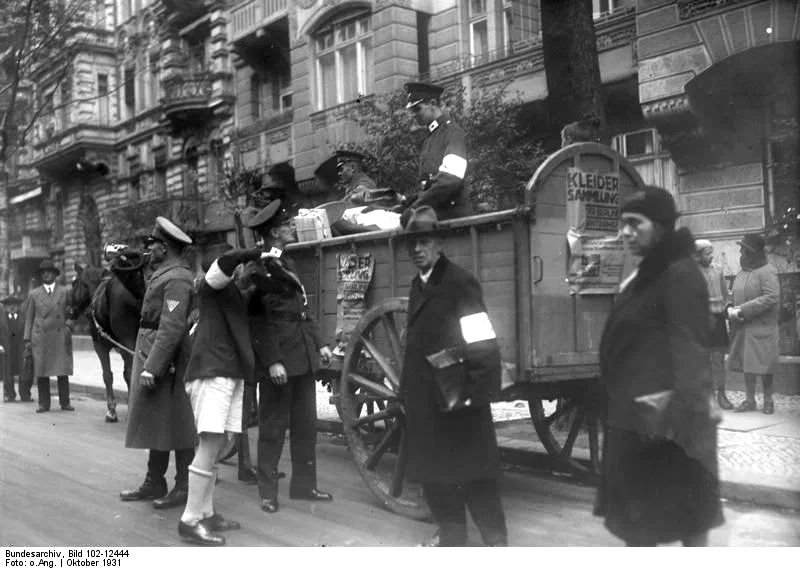
- Collecting for the poor, 1931 — Charity collections were everywhere in the Depression — and political organisations of every camp used them to win support.
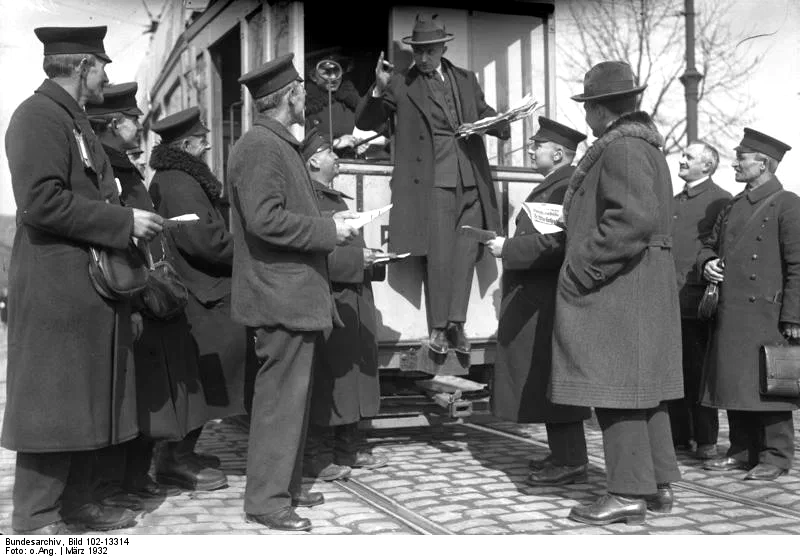
- The presidential election of 1932 — 1932 was a year of permanent campaigning: two rounds of the presidential election and two Reichstag elections, accompanied by street violence.
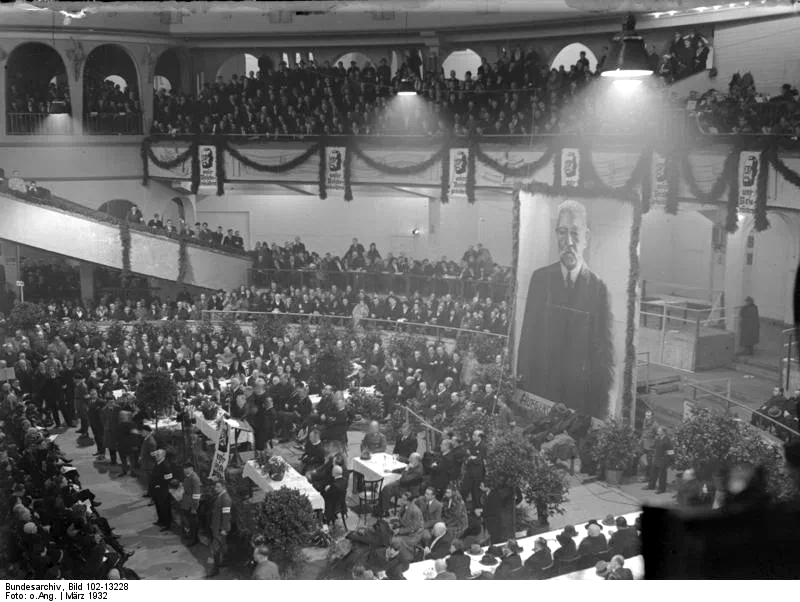
- Campaign rally in the Sportpalast, 1932 — The Sportpalast was the largest hall in Berlin; all parties held rallies there. In 1943 Goebbels proclaimed “total war” in the same hall.
Sources
- Eric D. Weitz (2007). Weimar Germany: Promise and Tragedy. Princeton University Press.
- Heinrich August Winkler (1993). Weimar 1918–1933: Die Geschichte der ersten deutschen Demokratie. C. H. Beck, München.