The Trümmerfrauen: Myth and Reality of the “Rubble Women”
The women who cleared Germany's ruins after 1945 became a national icon. Recent research shows a more complicated story.

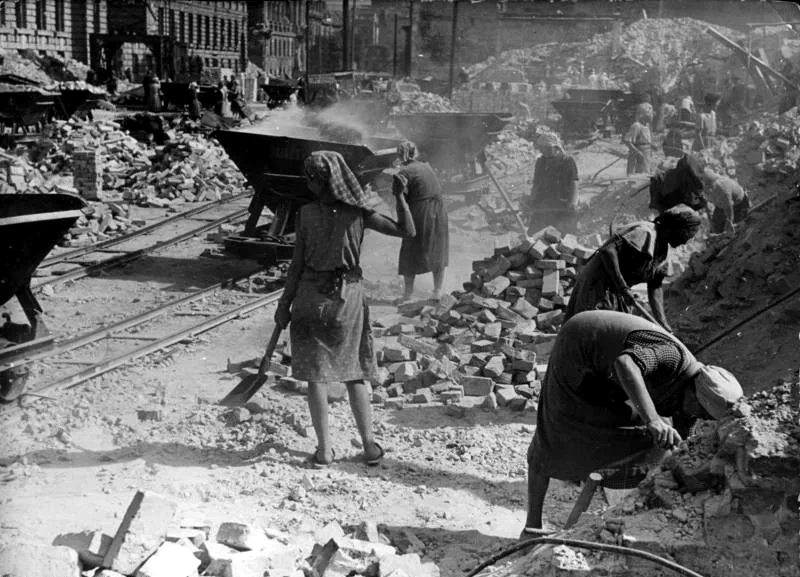
The image is familiar. Women in headscarves and aprons pass bricks from hand to hand in chains across mountains of rubble in Berlin, Dresden or Cologne. The Trümmerfrauen became one of the founding images of post-war Germany. They stood for a nation that had suffered, got to work and rebuilt itself. Monuments, stamps and political speeches have honoured them. The historian Leonie Treber has shown that the reality was more complicated.[1]
Germany in ruins#
By 1945 Allied bombing and the fighting had destroyed or damaged millions of homes. In many city centres most of the buildings were gone. Estimates put the rubble at around 400 million cubic metres. Clearing it took years. In some cities it lasted into the 1960s.[2]
Who really cleared the rubble?#
Treber’s research found that:[1]
- In the western zones, most rubble was cleared by construction companies with heavy machinery, by men employed by the cities, and by former Nazi party members, who were made to work as a punishment. The share of women was small. Women’s voluntary rubble work was the exception.
- In Berlin and the Soviet zone, far more women were involved, because labour was short and work was compulsory to get the better food ration cards. In Berlin some 60,000 women worked in rubble clearing at the peak.
- During the war, much of the rubble after air raids had already been cleared by forced labourers, prisoners of war and concentration camp prisoners.
How the myth was born#
In West Germany the Trümmerfrau became a national symbol only later, especially in the debates about pensions for older women in the 1980s. She represented a story Germans wanted to tell about themselves. In it they were victims of the war who had rebuilt their country through their own hard work. The question of who had started the war, and who had cleared the rubble before 1945, faded from view.[1]
Gallery#
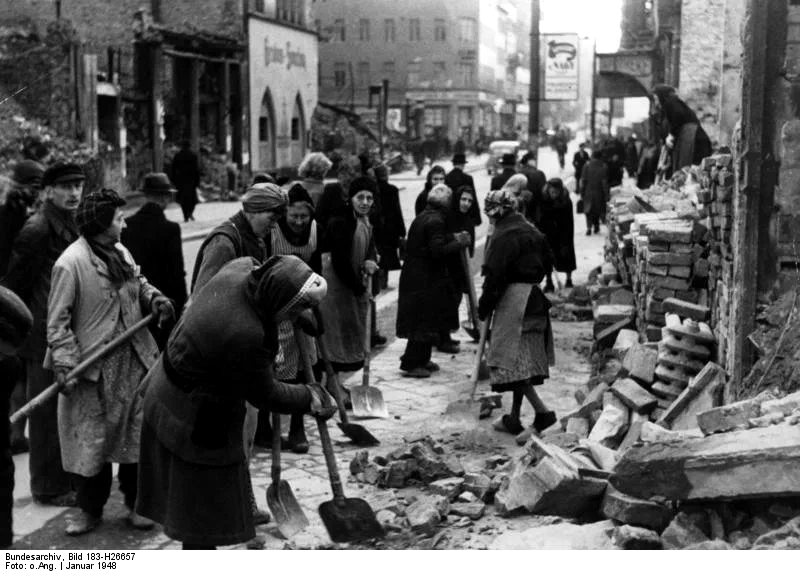
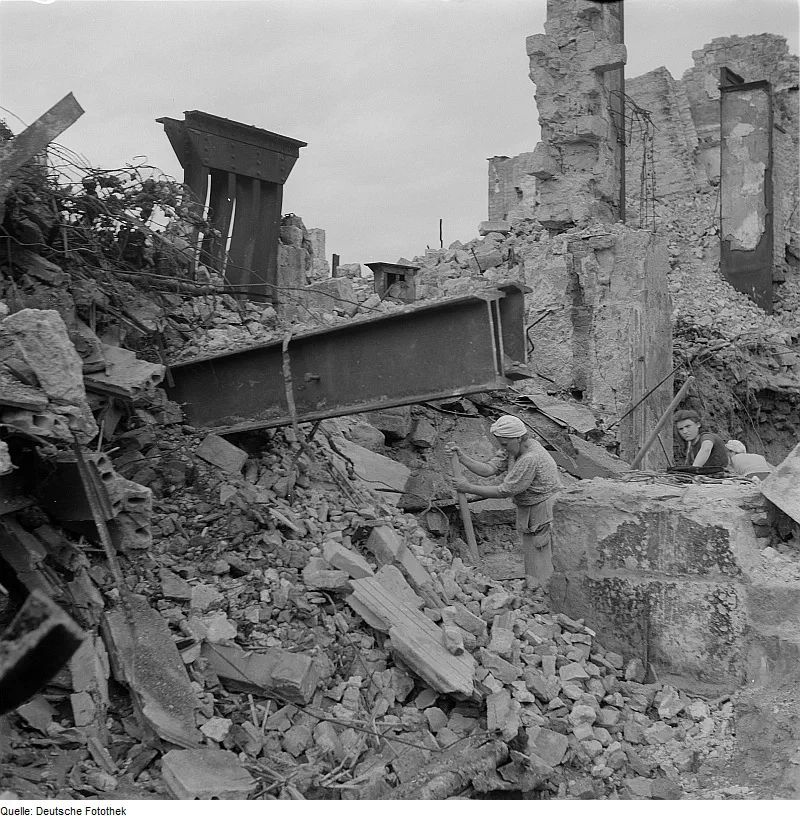
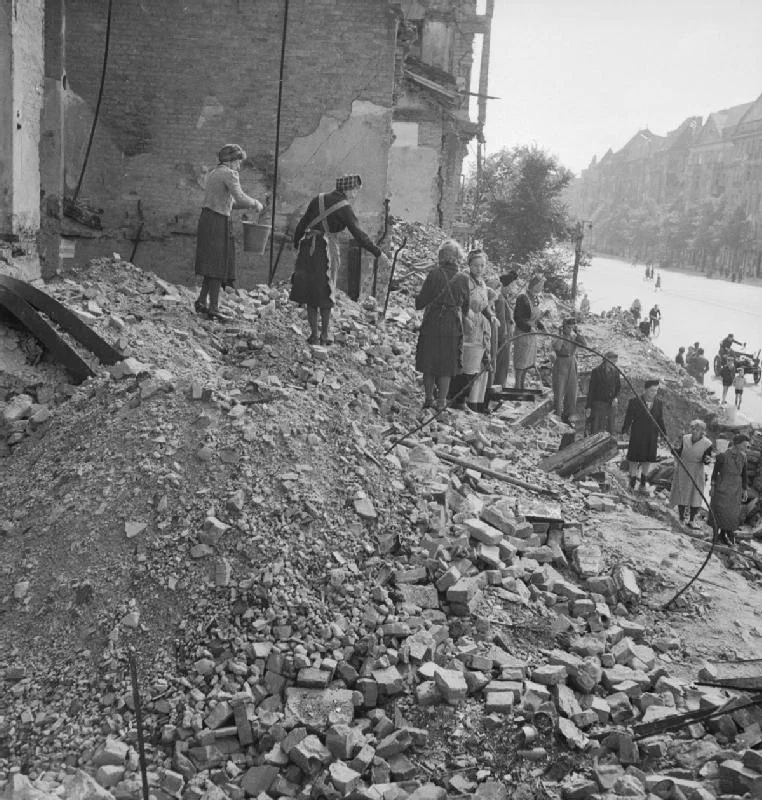
- Friedrichstraße, Berlin, 1946 — In Berlin rubble clearing was compulsory for many women: it brought the better food ration card.
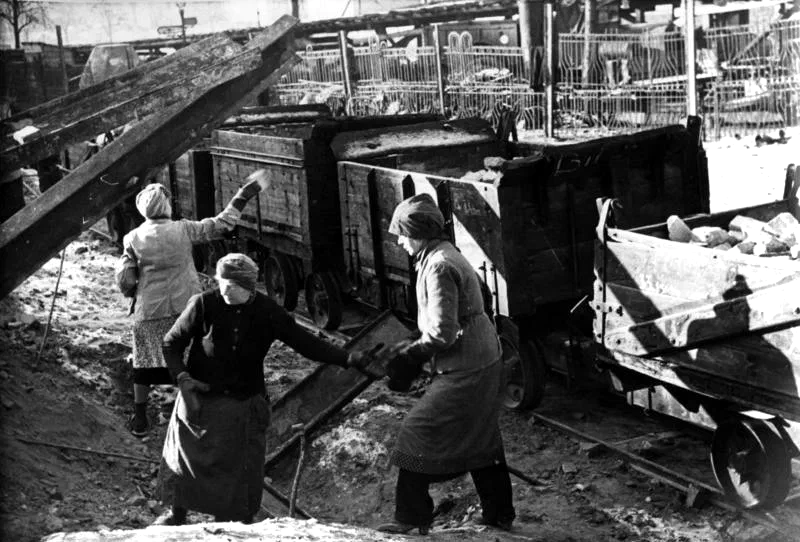
- Loading tipping wagons — Narrow-gauge field railways carried the rubble out of the city to dumps that later became hills, such as the Teufelsberg.
- Rubble women at work — Photographs like this became icons of reconstruction — and later of a national myth.
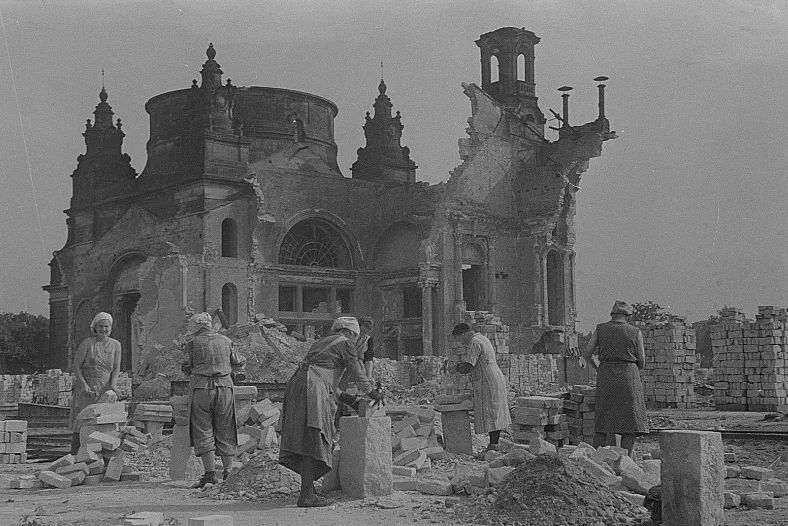
- Cleaning bricks in Dresden — Usable bricks were cleaned and stacked for rebuilding. The photographer Richard Peter documented the destroyed city in his book “Dresden – eine Kamera klagt an” (1949).
- Clearing the ruins — In Dresden, as in Berlin, more women took part than in the western zones, where companies with machinery did most of the work.
- Berlin under Allied occupation, 1945 — Photographed by a British Army Film and Photographic Unit sergeant in the summer of 1945.
Sources
- Leonie Treber (2014). Mythos Trümmerfrauen: Von der Trümmerbeseitigung in der Kriegs- und Nachkriegszeit und der Entstehung eines deutschen Erinnerungsortes. Klartext, Essen.
- Richard Overy (2013). The Bombing War: Europe 1939–1945. Allen Lane, London.


